Electrolysis versus laser: which one is right for you
In the quest for long term, hair-free skin, two treatments have dominated the entire conversation:
Electrolysis and laser hair removal.
As advancements in technology continue to evolve, it becomes increasingly important to understand the differences, efficacy and permanence of these two modalities to make an informed decision about which one would be best suited for you.
The science behind permanent hair removal
At Tsedeq naturalbeautyandskincare our approach to permanent hair removal is built solely on the science of permanent hair removal whilst maintaining the skin’s integrity and health as our highest priority.
“What does permanent hair removal actually mean?” you may ask.
It doesn’t mean only slowing down hair growth.
It doesn’t mean thinning it.
It doesn’t mean weakening it.
Permanent means:
Once a hair follicle has been treated thoroughly, that specific hair follicle’s regenerative capacity should be permanently disabled so that it will never produce another hair again, resulting in smooth, hair free and healthy skin.
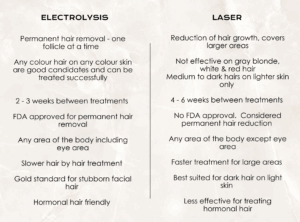
Unlike laser, electrolysis does not rely on dark hairs on light skin. This makes it the gold standard for:
- Permanent facial hair removal
- Electrolysis for hormonal hair growth
- Electrolysis for PCOS
- Electrolysis during perimenopause and menopause
- Treating grey, white, blonde and red hairs
For women seeking permanent facial hair removal, this precision absolutely matters.
The science and working mechanisms behind electrolysis and laser
Both electrolysis and laser work by targeting hair follicles located under the skin’s surface.
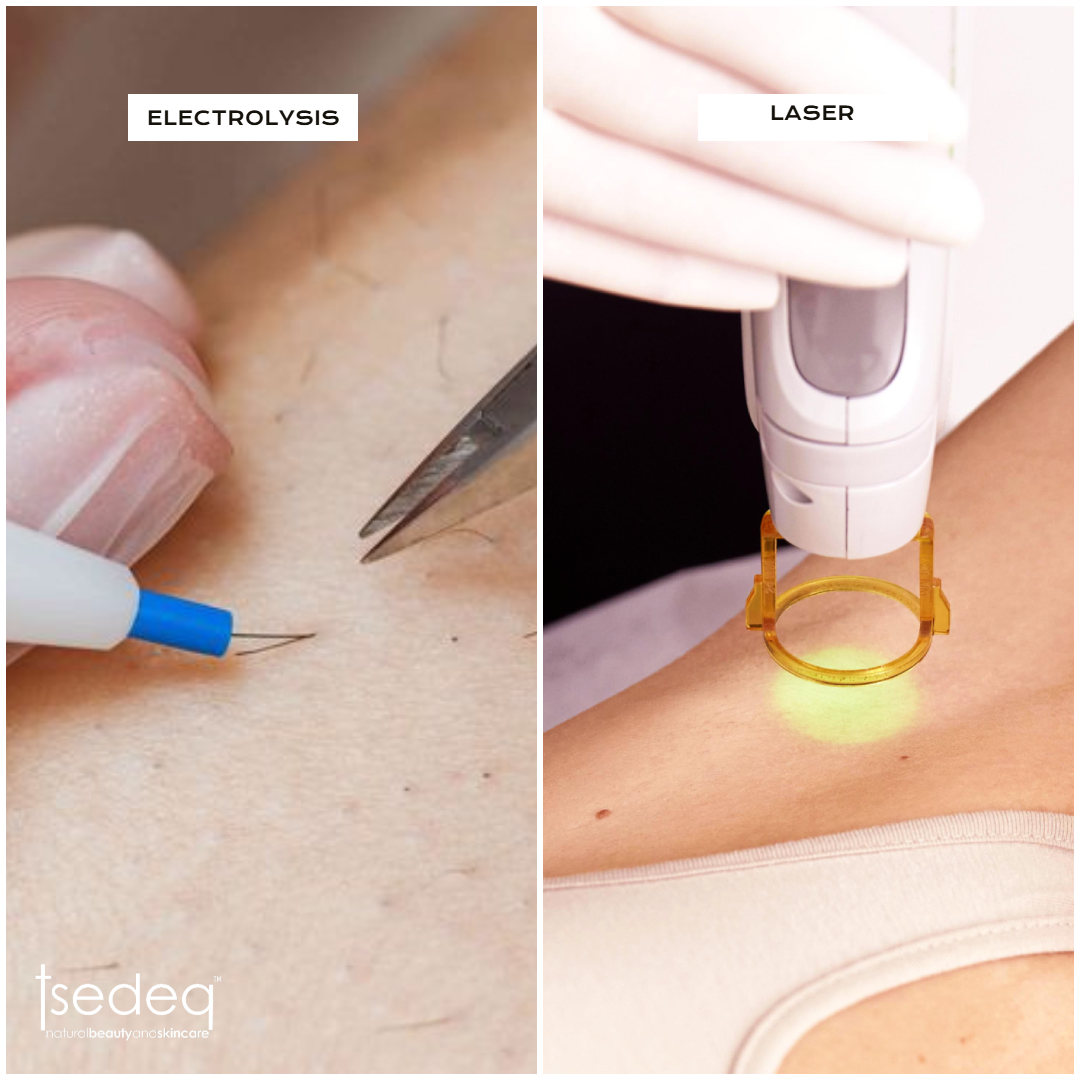
Electrolysis is a permanent hair removal treatment that is based on inserting a very fine probe into each individual hair follicle beneath the skin’s surface. An electric current is then delivered through the probe, directly into the follicle to permanently damage and destroy the cells responsible for hair growth.
Electrolysis targets one hair at a time. Any colour hair and any colour or tone skin can be treated successfully.
Laser hair removal uses mild radiation via high-heat energy light beams that are absorbed by the hair bulb containing melanin (colour). The follicle becomes damaged because of the heat emitted from the beam. Laser hair removal treats several follicles at a time.
Laser treatments can reduce hair growth considerably, but it’s not considered permanent and can’t be used on all skin tones or hair colours.
No quick fixes – electrolysis permanent hair removal is structured, biological process
Human hair grows in cycles, and not every hair on the human body is visible at the same time.
Electrolysis requires a visible hair to guide the probe safely and accurately into the follicle. Hair that are not visible on top the skin surface cannot be treated. The process of permanent hair removal happens gradually.
During each session:
- Visible hairs and follicles are treated
- Regenerative capacity is progressively disabled
- Hair density reduces over time
- Treated hairs in the active growth phase do not recover and stop producing hair – permanently
Areas that can be treated with electrolysis
Electrolysis allows for treatment anywhere on the body, including the eye and eyebrow area. Electrolysis is mostly used for the permanent removal on the facial area – particularly the lip, chin, jawline, cheeks and neck areas. Electrolysis is also successfully used on areas like eyebrows, underarms or anywhere where unwanted hair growth is experienced. Fine facial vellus hair or coarser hormonal hair, or even regrowth from previous laser all respond favourably to electrolysis.
Laser hair removal may be done just about anywhere on the face and body, except the eye and eyebrow area. Laser is recommended for larger body areas such as bikini lines, underarms, legs, back, stomach.
But when it comes to the face, electrolysis is almost always the preferred choice. It’s more precise, permanent, and safer for delicate, hormonally sensitive areas.
Electrolysis slower process offering permanent hair removal.
Laser: fast for reduction of hairs on larger areas.